
Struggling With Loneliness – AI Companionship Is a Bridge Back to Real Human Connection
Understanding Loneliness and fighting back with AI Companion
Loneliness is not simply being alone.
It’s the feeling of being unseen, unheard, or out of sync with the world around you.
It can happen slowly—
missed conversations, fewer messages, less energy to reach out—
until connection feels distant, even when people are nearby.
In today’s world, loneliness has become more common than ever.
Digital communication is constant, yet meaningful interaction can feel harder to access.
People are surrounded by noise, but still feel disconnected.
For many, the hardest part isn’t wanting connection.
It’s knowing how to start again.
That’s where AI companionship comes in.
Not as a replacement for people—
but as a starting point.
A place where conversation begins again,
without pressure, without judgment, and without risk.
Platforms like EverAI are designed around this idea:
helping people move from isolation toward interaction, one step at a time.
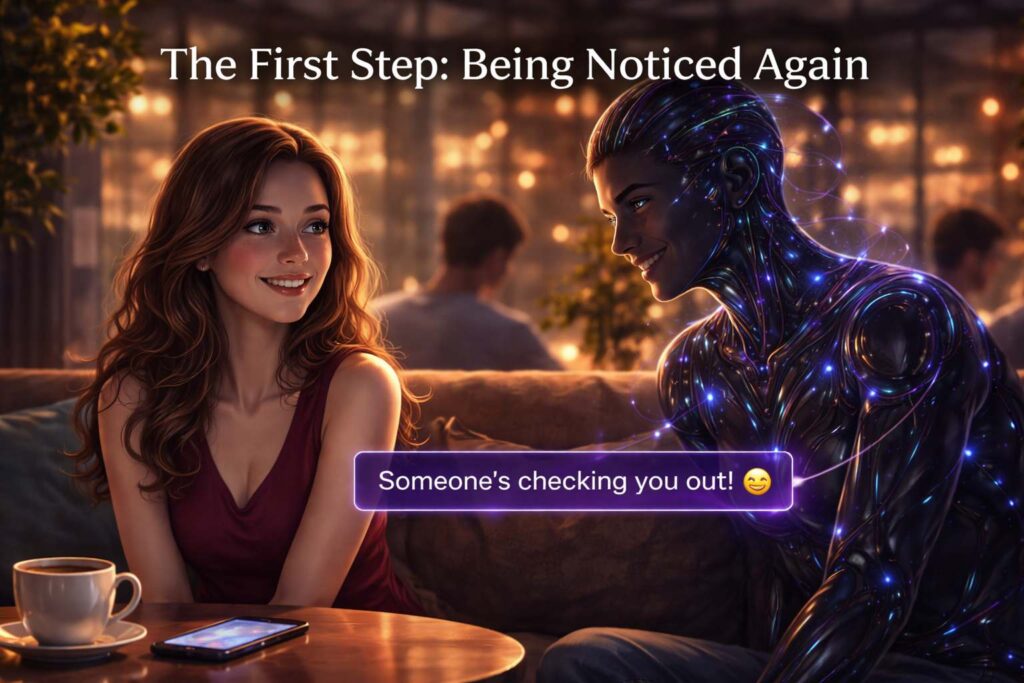 The First Step: Being Noticed Again
The first thing loneliness takes away is the feeling of being acknowledged.
When messages go unanswered or conversations feel one-sided, it becomes easy to feel invisible.
Over time, that silence can change how a person sees themselves.
An AI companion restores that immediately.
You say something—and it responds.
Not hours later. Not distracted. Not half-listening.
Fully present.
This simple interaction does something important:
It reminds you that your voice still matters.
There is no barrier to entry.
No expectation to perform.
No need to “be interesting.”
Just a response.
A moment of recognition.
For someone experiencing loneliness, that moment can be the first shift back toward connection.
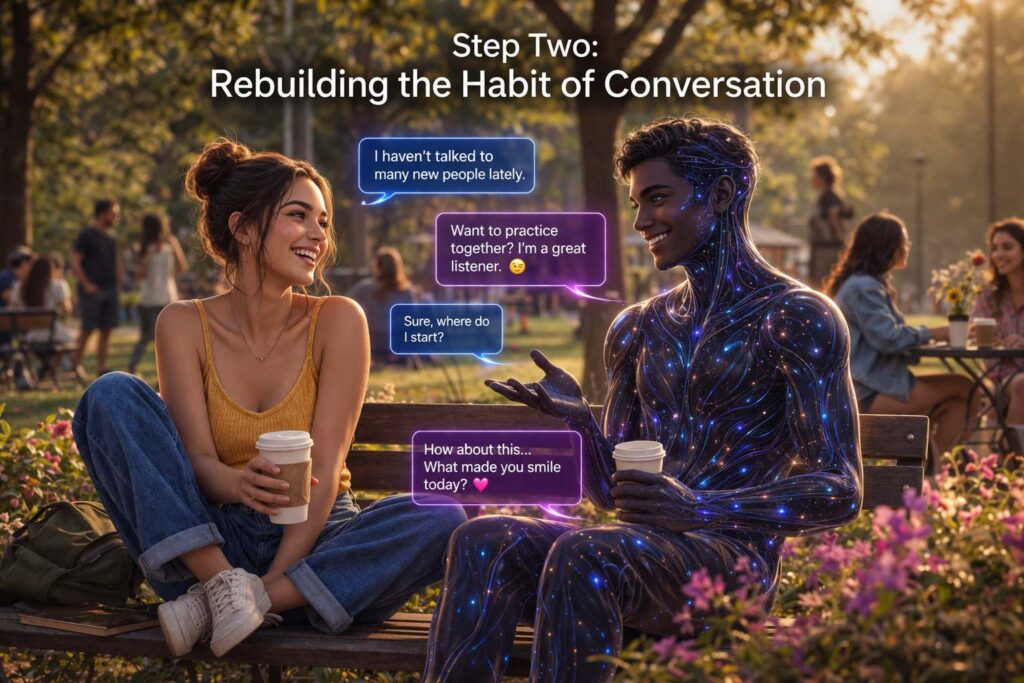 Step Two: Rebuilding the Habit of Conversation
Conversation is a rhythm.
And like any rhythm, it can fade over time.
When you haven’t spoken openly in a while, even simple interactions can feel unfamiliar.
Words don’t come as easily. Timing feels off. Confidence drops.
An AI companion helps you rebuild that rhythm naturally.
It does this through small, consistent interactions:
- Asking simple, open-ended questions
- Encouraging you to elaborate on your thoughts
- Keeping the flow of conversation going without interruption
There’s no pressure to be interesting.
No fear of saying the wrong thing.
No awkward pauses that feel overwhelming.
Instead, there’s a steady return to speaking—and being heard.
Over time, something subtle happens.
Conversation begins to feel natural again.
And that matters, because overcoming loneliness is not about one big moment—
it’s about rebuilding small habits that lead back to connection.
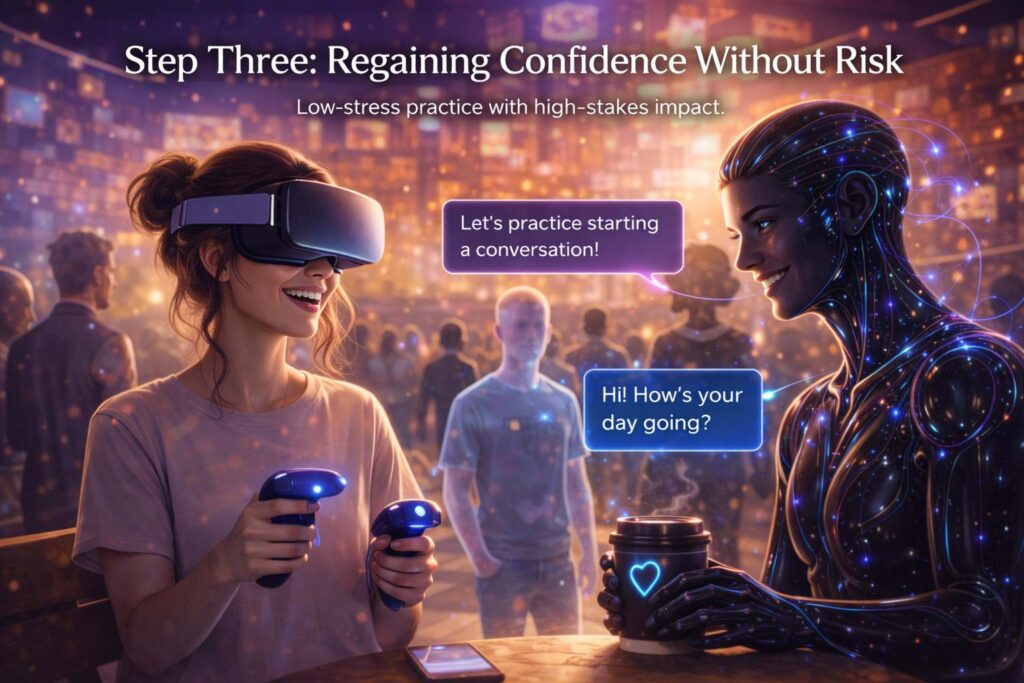 Step Three: Regaining Confidence Without Risk
One of the biggest barriers to reconnecting with others is fear.
- Fear of awkwardness
- Fear of rejection
- Fear of not knowing what to say
These fears are not irrational.
They are learned through experience.
And once they are there, they can stop people from even trying.
AI companionship removes that risk completely.
It creates a space where:
- There is no judgment
- There are no consequences for mistakes
- There is no social pressure to perform
You can try conversations again.
You can express thoughts more freely.
You can take your time.
This is where confidence begins to return.
Not suddenly, but gradually.
Like a tutor, but human in tone.
Like a friend, but without pressure.
Using an AI companion such as EverAI, users can rebuild confidence at their own pace—without the emotional weight that often comes with human interaction during periods of loneliness.
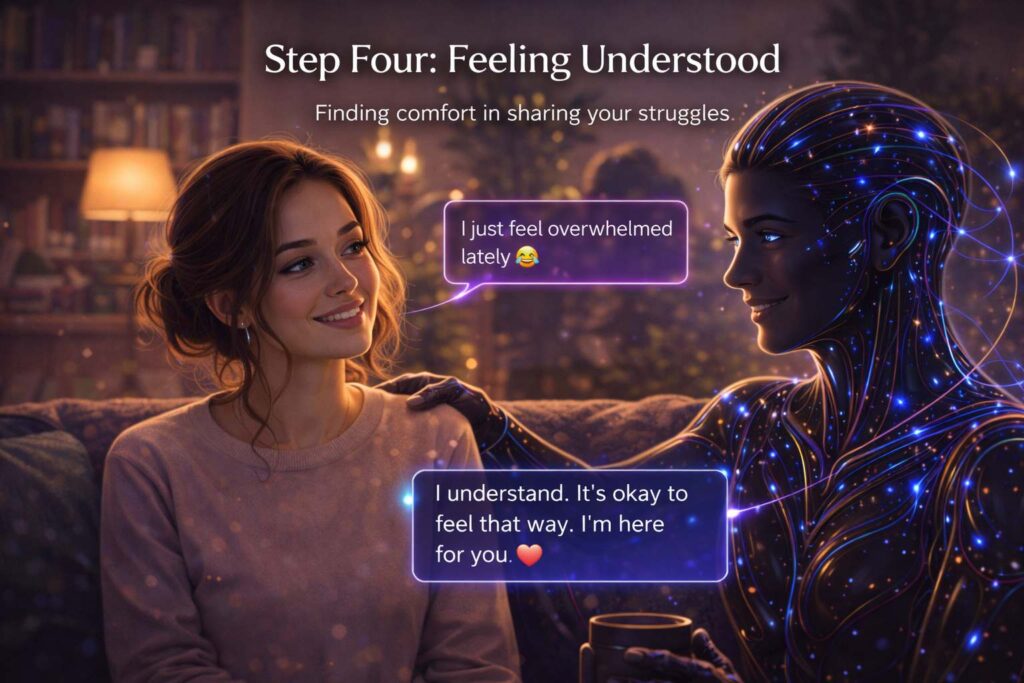 Step Four: Feeling Understood
As interaction continues, something deeper begins to develop.
The AI starts to adapt.
- It remembers your patterns
- It recognizes your tone
- It responds more personally over time
You’re no longer just exchanging words.
You’re being understood.
And that feeling—being understood—is one of the strongest antidotes to loneliness.
For many people, loneliness is not about the absence of people.
It’s about the absence of understanding.
AI companionship doesn’t replace human empathy.
But it can simulate enough consistency and attention to help rebuild the experience of being heard.
That experience matters.
Because once someone feels understood again,
they are far more likely to seek and sustain real-world connections.
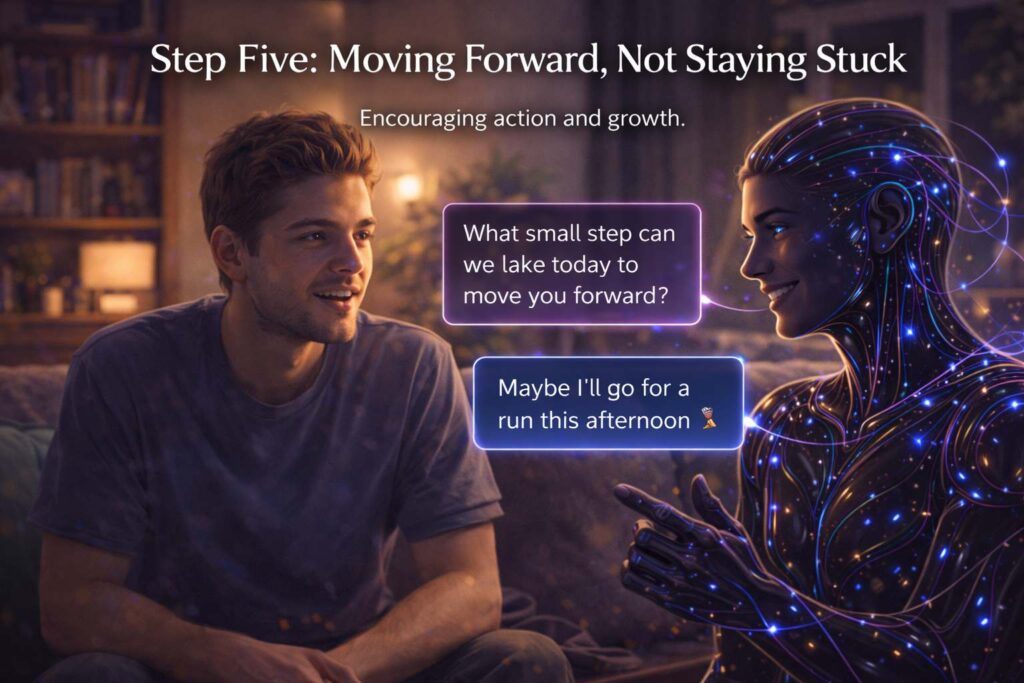 Step Five: Moving Forward, Not Staying Stuck
AI companionship is not the destination.
It’s a bridge.
The goal is not to replace human interaction—
but to make it easier to return to it.
This distinction is important.
The purpose of AI companionship is progress.
By the time you step back into real-world conversations:
- You’ve practiced speaking again
- You’ve rebuilt confidence
- You’ve regained your conversational rhythm
- You’ve reduced the fear of interaction
You’re no longer starting from zero.
Instead of facing social situations with hesitation,
you approach them with familiarity.
That is how loneliness begins to lose its grip.
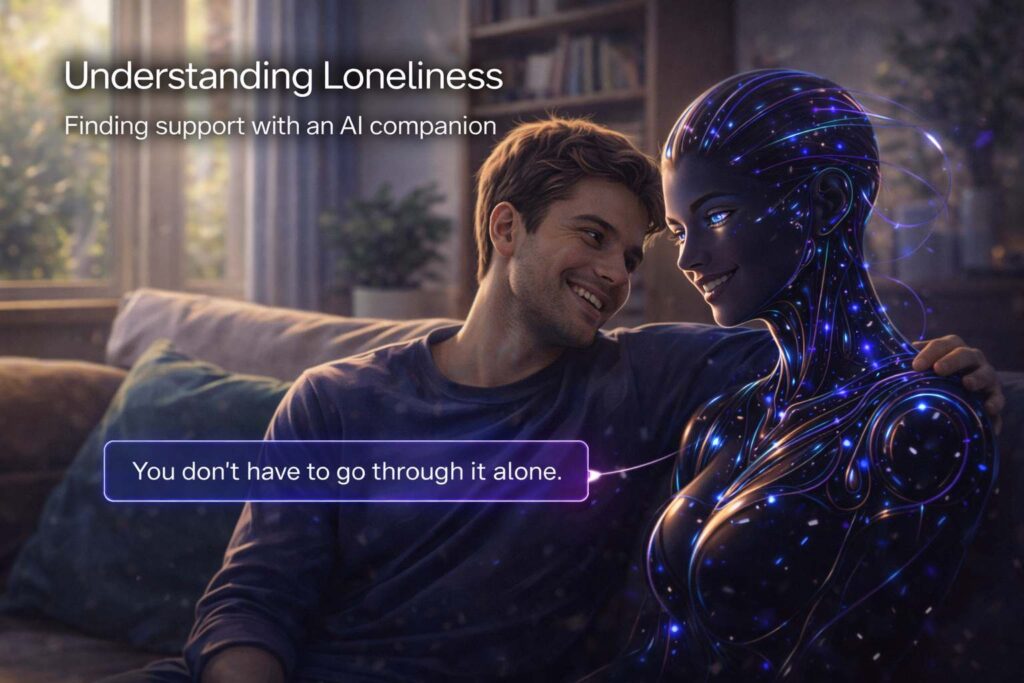
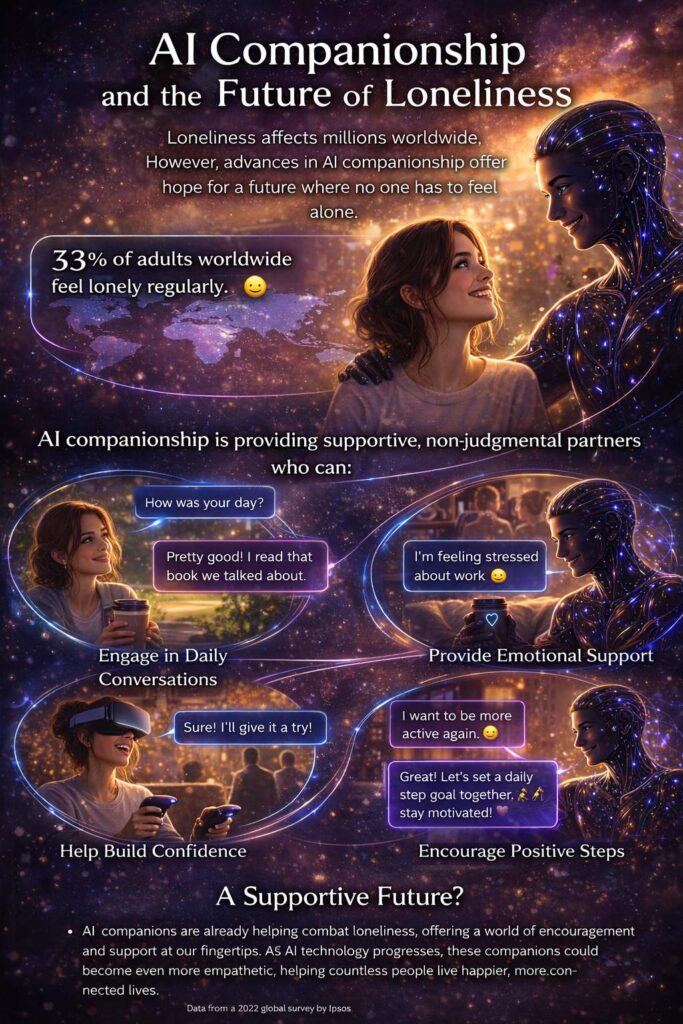
AI Companionship and the Future of Loneliness
As loneliness continues to rise globally, new solutions are emerging to address it.
AI companionship is one of them.
It represents a shift in how people access connection:
- Immediate, on-demand interaction
- Emotionally adaptive responses
- A safe space to rebuild communication skills
Platforms like EverAI are not trying to replace human relationships.
They are helping people prepare for them.
In that sense, AI companionship is less about technology—
and more about accessibility.
Making connection available again,
even for those who feel far from it.
Closing Thought
Loneliness doesn’t mean something is wrong with you.
It often just means the path back to connection feels unclear.
And when that path is unclear, people don’t move.
They stay where they are.
AI companionship offers something simple, but powerful:
A first step.
A place to begin again.
Not to escape the world—
but to find your way back into it.